
Underwater hull cleaning & inspection
Coating-safe, diver-free hull cleaning using cavitation technology, reducing fuel consumption and preserving the paint system.
- Depth rating
- Up to 100 m
- Output
- Up to 1,000 m²/h
- Contact
- Non-contact
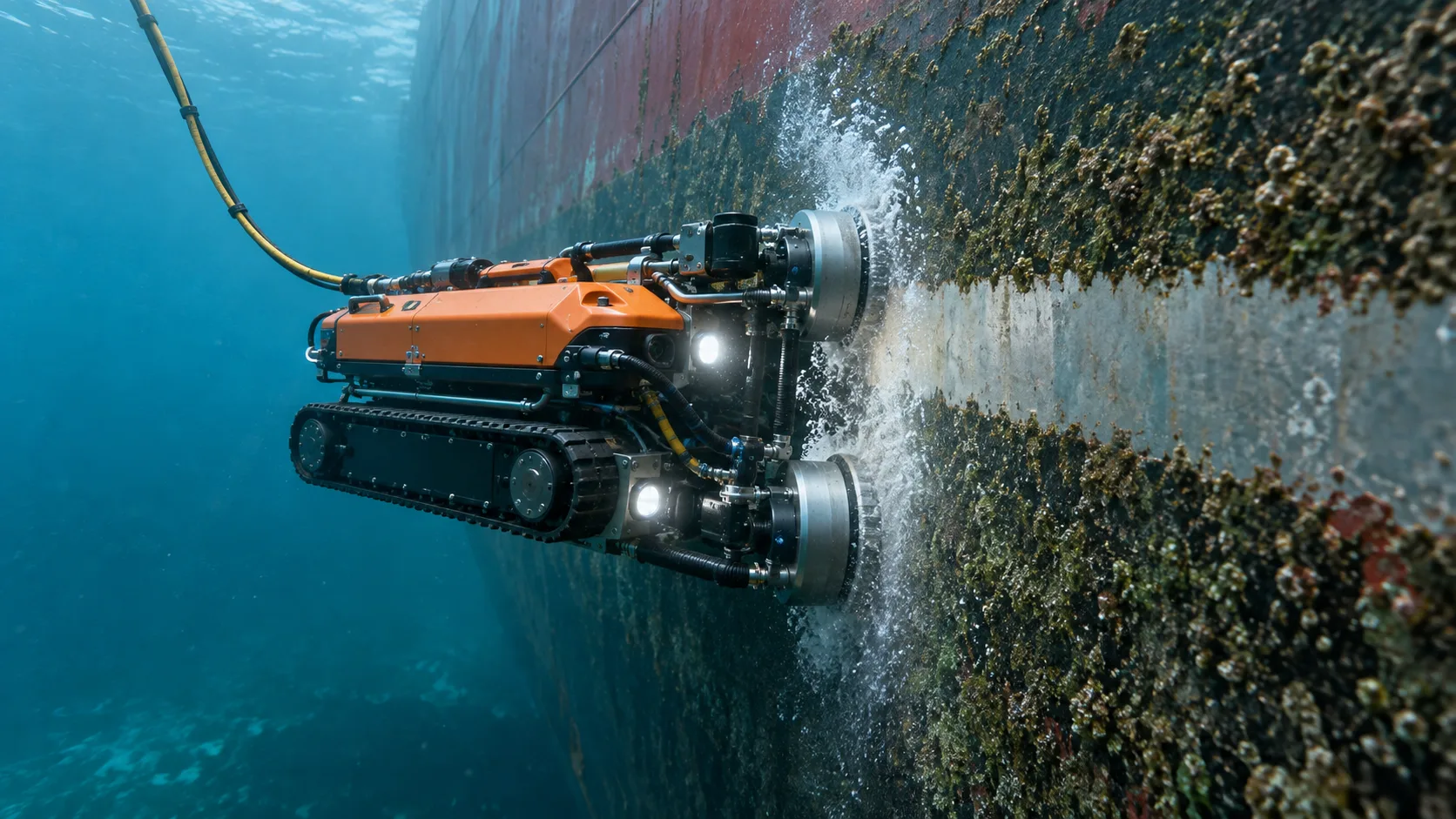
How cavitation cleaning works
When local water pressure falls below its vapour pressure, microscopic bubbles form. As they collapse at the hull surface, they release micro-jets and shock waves that remove barnacles, mussels, oysters, algae and slime.
The cleaning energy comes from the collapsing bubbles rather than brushes or direct jet impact, so anti-fouling and anti-corrosion coatings remain intact.
- ROV cleaning: unmanned, rated to 100 m, 300–1,000 m²/h
- Live video for simultaneous inspection and recorded proof of work
- Diver-operated tools for propellers, rudders, sea chests and welds
- No microplastics shed from worn bristles
- Applications: ship hulls, platform jackets, wind-turbine piles, net cages and subsea pipelines
Comparison with conventional methods
| Criterion | Cavitation robot | Diver cleaning | Brush robot |
|---|---|---|---|
| Safety | No divers required for the main hull | Diving risk; limited by depth and current | Unmanned |
| Coating impact | Non-contact; coating preserved | Risk of damage from brushes and lances | Abrades anti-fouling |
| Productivity | Up to 1,000 m²/h, continuous | Approx. 200–300 m² per day | Moderate; reduced on heavy fouling |
| Complex geometry | Follows curves, welds and piles | Good, but diver-dependent | Blind spots on curved areas |
| Quality record | Camera-recorded and traceable | Varies by diver | Limited |
Productivity figures apply to fouling up to 2 cm thick.
Related services
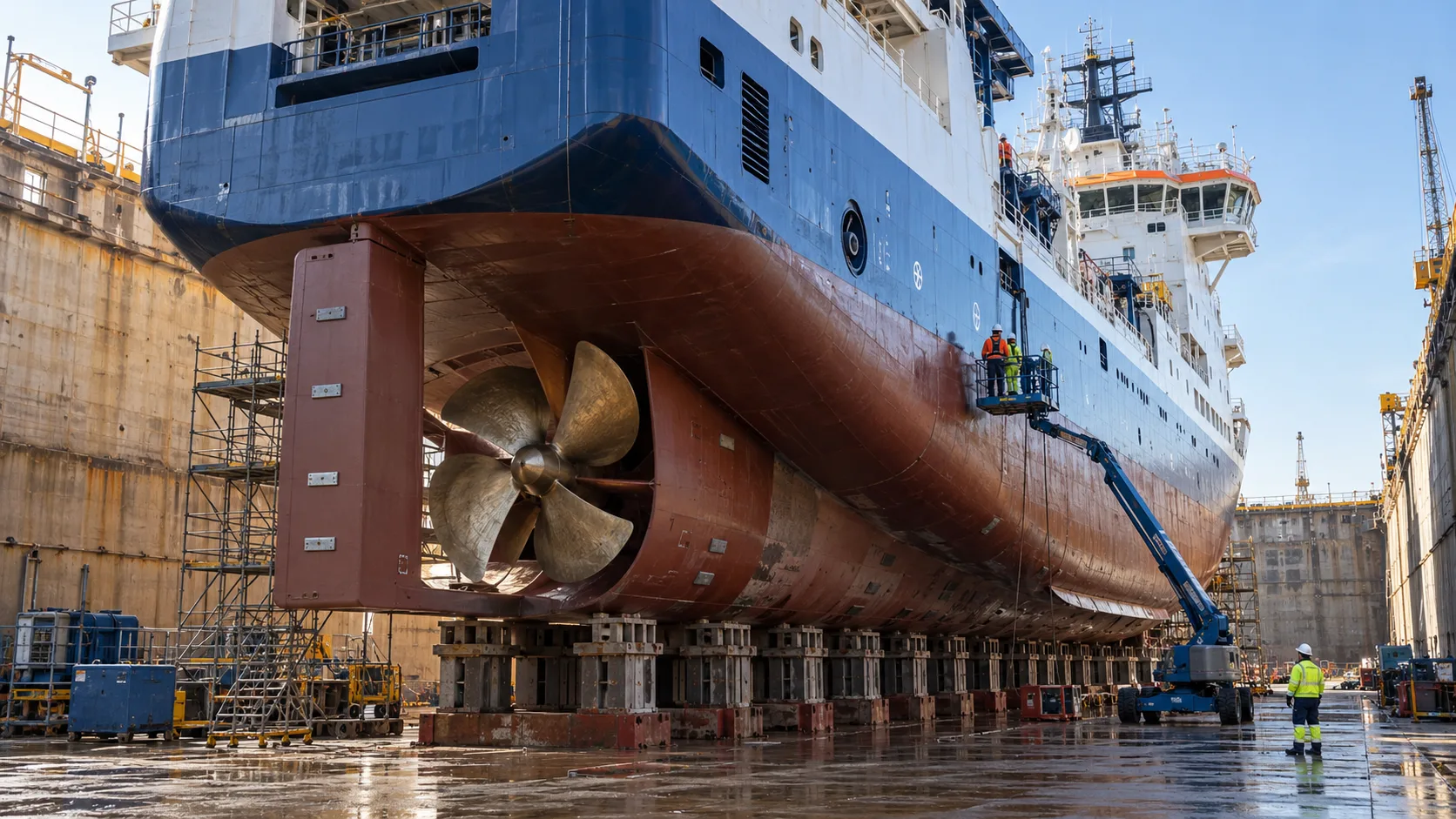
Dry-docking, repairs & conversions
Repair specifications, yard tendering, cost control, retrofits and on-site supervision.

Ship management consultancy
Technical, safety-management and operational advisory for owners and operators.

Pre-purchase & condition surveys
Independent inspections and technical due diligence before you buy, charter or finance a vessel.
Book a hull inspection or cleaning
Share the vessel name, location and date of the last cleaning.